Lost in the Pulse of Tehran’s Street Art and Soul
Ever wondered what it feels like to walk through a city where ancient history whispers from every wall—while vibrant street art screams rebellion and beauty side by side? That’s Tehran. I didn’t just visit—I *felt* it. From underground galleries to hidden poetry corners, the city’s cultural rhythm is raw, real, and totally unfiltered. This isn’t your textbook Iran. It’s alive, complex, and full of surprises. Beyond the geopolitical headlines lies a metropolis pulsing with creativity, resilience, and quiet defiance. This is a city where tradition doesn’t stand still—it dances, argues, and evolves in alleyways, cafés, and private homes. To understand Tehran is not to read about it, but to move through its streets with open eyes and an open heart.
First Impressions: Beyond the Expected
Tehran greets you with contradictions. As the plane descends, the Alborz Mountains rise like sentinels along the northern edge of the city, their snow-capped peaks glinting under a crisp winter sun. Below, the urban sprawl unfolds—a vast, energetic mosaic of concrete, glass, and green rooftops. The first thing you notice after landing is not silence, but sound: the hum of traffic, the call to prayer echoing from minarets, and the faint beat of music drifting from passing cars. The airport exit is lined with women adjusting their headscarves with practiced ease, not as symbols of restriction, but as part of a personal rhythm, like buttoning a coat.
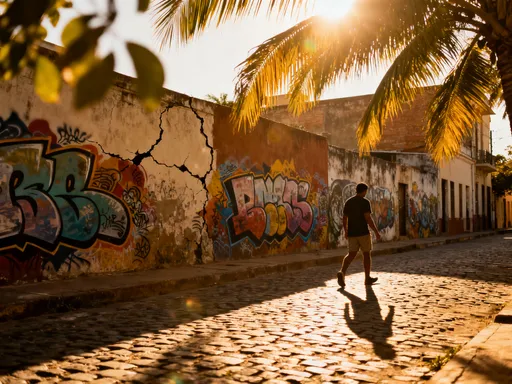
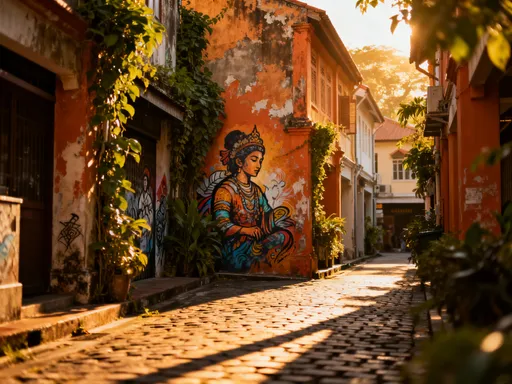
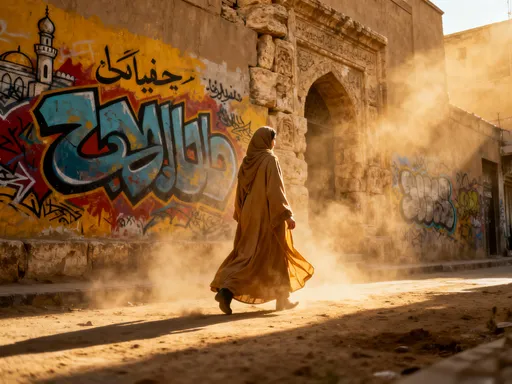
Drive into the city, and the pulse quickens. Highways snake through the foothills, dotted with graffiti—some political, some poetic, all ephemeral. Spray-painted stencils of birds, abstract faces, and Farsi calligraphy appear beneath overpasses, washed away by municipal crews only to reappear days later. These markings are not acts of vandalism but declarations of presence. They say: we are here, we see, we create. In taxis, drivers play everything from classical tar music to underground Persian hip-hop, their playlists a secret archive of the city’s sonic soul. The women in the backseat debate poetry, politics, and the best places for saffron ice cream with equal passion.
This is not the Tehran of news reels. There are no protests in the streets, no slogans chanted in unison. Instead, there is a quiet intensity—a sense of people living fully within the boundaries they’ve been given, yet constantly testing their edges. The city doesn’t shout; it murmurs, hums, and sometimes sings in whispers. To travel here is to learn a new language of expression, one built on metaphor, rhythm, and restraint. It’s a place where culture isn’t performed for tourists—it unfolds naturally, in the way a shopkeeper recites Hafez while weighing spices, or how teenagers gather in park corners to sketch, read, and listen to music on shared earbuds.
Art That Defies Silence: Tehran’s Underground Gallery Scene
If you want to see the soul of Tehran, go underground—literally. Beneath the city’s surface, in converted basements and repurposed storage spaces, a network of unofficial galleries thrives. These are not the polished white cubes of Western art districts, but intimate, often unmarked rooms where artists test ideas too bold for public display. Here, creativity moves in code. A painting of a bird with broken wings might speak of exile. A forest of faceless figures could represent conformity. An empty chair, draped in fabric, becomes a monument to absence. In a city where direct political commentary is dangerous, metaphor becomes the language of truth.
One such space is Aun Gallery, tucked into a residential neighborhood in northern Tehran. Run by a collective of young curators, it hosts rotating exhibitions that blend traditional Persian motifs with contemporary critique. On one visit, a series of digital collages merged miniature painting techniques with glitch art, creating dreamlike scenes where ancient kings floated above modern highways. Another featured embroidered textiles stitched with censored words—lines from banned poems, fragments of forbidden songs—woven so finely they looked like decorative patterns until you leaned in. These works don’t scream. They invite you to look closer, to listen harder.
Then there’s Aria Gallery, known for supporting emerging artists who work in abstraction and surrealism. Here, the focus is not on shock value but on emotional resonance. One exhibit featured a room filled with suspended mirrors, each slightly distorted, reflecting visitors in warped, fragmented forms. The artist described it as a meditation on identity in a society where self-expression is both essential and constrained. Visitors moved slowly, watching themselves shift and blur, caught between who they are and who they must appear to be.
What makes these spaces powerful is their intimacy. You won’t find crowds or press releases. Admission is often by word-of-mouth or social media whisper. Conversations happen in hushed tones, not because people are afraid, but because they understand the weight of what’s being shared. Art here is not entertainment—it’s a form of survival, a way to process the unspoken. And while these galleries operate in the shadows, they are not hidden out of shame. They are hidden because they choose to be—protecting their artists, their audiences, and the fragile space where free thought can still breathe.
Poetry as Pulse: Reciting Hafez in a Tehran Café
In a narrow alley in Tehran’s historic district, behind a wooden door with a brass latch, lies a *qahveh-khaneh*—a traditional Persian coffeehouse. The air is thick with the scent of cardamom and roasted beans. Men in wool coats sit on low couches, sipping thick, dark coffee from delicate glass cups. Some read newspapers. Others play backgammon, the click of dice punctuating long silences. But in the corner, a different kind of game is underway. A group of young people, some in modern dress, others in traditional *roozaris*, take turns reciting verses from Hafez, their voices rising and falling like music.
This is not performance. It’s participation. In Iran, poetry is not confined to books or classrooms. It lives in daily life. Hafez, the 14th-century mystic poet, is quoted at weddings, funerals, and even during arguments. His verses are used to flirt, to console, to challenge. To know Hafez is to be literate in the emotional language of the culture. And in this café, that literacy is on full display. One young woman recites a ghazal about love and loss, her voice trembling slightly. An older man responds with a verse about divine mystery, nodding as if the poem has answered an unspoken question.
Later, someone pulls out a well-worn copy of the *Divan-e Hafez* and offers a *fal-e Hafez*—a fortune reading using random verses. A visitor closes their eyes, flips the book, and lands on a poem about spring returning after winter. The group smiles. It’s seen as a good omen. But the meaning runs deeper. In a country where the future is often uncertain, Hafez offers not predictions, but perspective. His words don’t promise resolution—they offer acceptance, irony, and the quiet hope that beauty persists even in hardship.
These cafés are more than cultural relics. They are living spaces where generations meet, where classical forms are kept alive not through preservation, but through use. You won’t find museum placards here, no guided tours. But you will find something rarer: a tradition that doesn’t need to be explained because it is simply lived. To sit in one of these rooms, listening to poetry rise above the clink of cups, is to understand that in Tehran, the past is not behind—it’s beside you, speaking in rhythm and rhyme.
Crafting Identity: Hands-On at Tehran’s Bazaar Workshops
The Grand Bazaar of Tehran is more than a marketplace—it’s a living organism. Winding through its covered alleys, you pass stalls selling saffron, spices, copperware, textiles, and hand-knotted carpets. But beyond the shopping, there are spaces where craft is taught, not just sold. In tucked-away corners of the bazaar, artisans open their workshops to visitors for short apprenticeships—two hours of copper engraving, a morning of carpet knotting, an afternoon learning calligraphy with reed pens and ink.
One such workshop focuses on *naqsh*, the traditional art of Persian metal engraving. Under the guidance of a master craftsman with hands worn smooth by decades of work, participants learn to carve intricate floral and geometric patterns into copper trays. The tools are simple: a hammer, a chisel, a wooden block. But the precision required is immense. Each strike must be measured, each line deliberate. As you work, the artisan shares stories—how his grandfather taught him, how the designs echo ancient Persian empires, how each pattern carries symbolic meaning. A rose for love. A cypress for eternity. A flowing river for life.
These workshops are not tourist gimmicks. They are acts of cultural transmission. The artisans don’t just teach technique—they pass on a worldview. In a world of mass production, their work insists on slowness, care, and intention. And for visitors, the experience is transformative. There’s a deep satisfaction in creating something with your hands, especially when that something connects you to centuries of tradition. By the end of the session, your tray may not be perfect, but it carries your effort, your focus, your moment in the continuum of craft.
What’s remarkable is how accessible these experiences are. No special connections are needed. Many workshops welcome drop-ins or can be booked through local cultural centers. Some are even led by women, who, despite societal restrictions, have carved out spaces for themselves in traditionally male-dominated crafts. Their presence is a quiet statement: culture is not owned by one gender, one class, or one era. It belongs to those who keep it alive.
Dance Without Movement: Music and Performance in a Censored City
In a living room in northern Tehran, the lights are dimmed. A small group of friends sits on floor cushions, passing around a platter of dried nuts and fresh herbs. In the center, a young band tunes their instruments—guitar, daf (a frame drum), and a modified setar. They begin to play. The music is haunting, a blend of traditional Persian scales and indie rock rhythms. One song tells of longing; another, of quiet resistance. No one dances. But their feet tap, their heads sway, their eyes close as if memorizing the sound.
This is how music lives in Tehran—privately, intimately, and with great care. Public concerts by mixed-gender bands are restricted. Dancing in public is not allowed. Yet music thrives, moving through underground networks, private gatherings, and digital platforms. Persian hip-hop, once dismissed as a Western import, has become a powerful voice for youth, blending Farsi poetry with global beats. Electronic producers fuse classical motifs with ambient textures, creating soundscapes that feel both ancient and futuristic.
These home concerts are not just about entertainment. They are acts of trust. Guests are vetted. Phones are often left at the door. The risk is real—authorities can shut down gatherings deemed inappropriate. But so is the reward: the chance to experience music as communion, not consumption. In these rooms, melody becomes memory, rhythm becomes resistance, and silence between songs carries as much weight as the notes themselves.
For visitors lucky enough to be invited, the experience is unforgettable. There’s no stage, no spotlight, no applause. Just people listening, really listening, to something that matters. It’s a reminder that art doesn’t need spectacle to be powerful. Sometimes, the most revolutionary act is simply to play, to sing, to gather—and to do it quietly, together.
Cinema as Mirror: A Night at Tehran’s Film Museum
On a quiet evening in Tehran, a line forms outside the Iranian Artists Forum. Inside, the city’s Film Museum prepares for a screening. Tonight’s feature: a restored print of *The Color of Paradise*, Majid Majidi’s poetic 1999 drama about a blind boy and his strained relationship with his father. The audience is a cross-section of Tehran—students, artists, older couples, young families. They file in quietly, exchanging greetings in hushed tones. The lights dim. The screen glows.
What follows is not just a film, but a shared emotional journey. Majidi’s use of natural light, the sound of wind through trees, the close-ups of small hands feeling bark and leaves—every frame feels deliberate, reverent. When the boy finally hears the sea, the audience holds its breath. There’s no dialogue, no music, just waves. And in that silence, something collective stirs. A woman wipes her eyes. A man sighs deeply. No one speaks. The film ends, the credits roll, and for a long moment, no one moves.
This is the power of Iranian cinema: its ability to say the unsayable through image and metaphor. With limited resources and strict content guidelines, filmmakers have developed a language of restraint and suggestion. Children often serve as protagonists, not because the stories are for children, but because their innocence allows filmmakers to explore complex themes—grief, faith, injustice—without direct confrontation. Visual poetry replaces political rhetoric. And in doing so, Iranian films have gained international acclaim, winning awards at Cannes, Venice, and Berlin.
Attending a screening in Tehran is different from watching the same film abroad. Here, the context is lived. The landscapes on screen are real. The silences are familiar. And the emotions are not observed from a distance—they are felt in the room, passed from person to person like a current. To sit in that darkness, surrounded by fellow viewers, is to understand that cinema here is not escape. It is reflection. It is connection. It is, in its own quiet way, truth-telling.
The Quiet Rebellion: Women Shaping Tehran’s Cultural Future
Walk through Tehran’s galleries, cafés, and workshops, and you’ll notice something: women are everywhere. Not just as visitors, but as creators, curators, teachers, and leaders. In a society where public roles for women are often constrained, culture has become a space of quiet empowerment. Female calligraphers reinvent classical scripts with bold new forms. Women-run art initiatives host exhibitions in private homes. Female directors helm award-winning films that challenge stereotypes from within.
One such space is a studio in the Elahieh neighborhood, run by a collective of female artists. Here, they teach painting, host poetry readings, and organize small exhibitions focused on themes of identity, memory, and resilience. The studio is modest—white walls, wooden floors, a shelf of tea cups. But the energy is electric. On the day of a visit, a young woman demonstrates *siah-mahi*, a traditional Persian painting style using ink and brush to create fish-like abstract forms. She explains how the technique, once used for decorative purposes, has been reclaimed as a form of personal expression. “We’re not just preserving tradition,” she says. “We’re asking it new questions.”
These women do not frame their work as protest. They speak of craft, beauty, and continuity. And yet, their presence is political. By claiming space, by teaching, by creating, they redefine what is possible. They wear headscarves not as symbols of submission, but as part of a complex identity that includes strength, intellect, and artistry. Their modest dress coexists with fierce independence. Their voices are calm, but their impact is profound.
For visitors, meeting these women is a lesson in nuance. It’s a reminder that empowerment doesn’t always look the way we expect. It doesn’t require Western markers to be real. In Tehran, it looks like a woman teaching poetry in a café, a filmmaker editing her latest work at midnight, a potter shaping clay with steady hands. It looks like culture being made, not by grand gestures, but by daily acts of courage and creativity.
Conclusion: Tehran’s Culture Isn’t Preserved—It’s Being Made
Tehran is not a museum. It is not a relic frozen in time, nor is it a political symbol to be dissected from afar. It is a living, breathing city where culture is not preserved behind glass, but forged in real time—in graffiti under overpasses, in poetry recited over coffee, in the quiet strum of a guitar in a private home. To visit Tehran is to witness a society reinventing itself daily, using art, music, craft, and words as tools of resilience and hope.
The stories here are not simple. They do not fit into headlines or stereotypes. They are layered, like the city itself—ancient and modern, restrained and rebellious, quiet and loud all at once. To understand them requires more than observation. It requires listening. It requires patience. It requires the willingness to move beyond fear and curiosity into genuine connection.
So come to Tehran not as a tourist, but as a witness. Come to feel the pulse of a city that refuses to be silenced. Come to see how beauty emerges not despite limits, but sometimes because of them. And come with respect—for the people, the traditions, and the quiet courage it takes to create in the spaces between words. Because in Tehran, culture is not something you see. It’s something you feel, in your chest, in your breath, in the silence after a poem ends.