You Won’t Believe What I Discovered in Munich
Munich isn’t just beer halls and lederhosen—trust me, I went in expecting exactly that. But what I found was a city pulsing with quiet traditions, hidden courtyards, and everyday moments that feel like stepping into a living postcard. From morning markets to midnight conversations with locals, Munich’s culture revealed itself slowly, authentically. This is not a tourist checklist—it’s a real encounter with German life, one cobblestone at a time. The rhythm of the city doesn’t announce itself with fanfare; it hums beneath the surface, in the way shopkeepers greet regulars by name, in the hush of a centuries-old courtyard tucked behind a bakery, in the shared silence of strangers waiting for the tram. What surprised me most wasn’t the grand sights, but the small, unspoken rituals that make Munich not just visitable, but deeply livable.
First Impressions: Beyond the Postcard
Arriving at Munich Hauptbahnhof on a crisp autumn morning, I was immediately struck by a sense of calm efficiency. The station, though bustling, moved with a quiet order—no shouting, no jostling, just purposeful strides and the soft rustle of travel bags on polished floors. My preconceived image of Munich, shaped by Oktoberfest ads and travel brochures, had prepared me for crowds in dirndls and steins of beer. Instead, I found clean, wide sidewalks, cyclists weaving with precision, and locals queuing patiently at tram stops, even when no one was watching. It was a city that seemed to function on mutual respect, not enforcement.
The contrast between expectation and reality deepened as I walked toward the Altstadt. Yes, there were tourists clustered around Marienplatz, craning their necks at the Neues Rathaus clock tower. But just one block over, an elderly woman in a wool coat bargained gently with a florist over chrysanthemums, while a delivery van parked neatly at a curb unloaded crates of apples. The city didn’t hide its tourist attractions—it simply didn’t revolve around them. Munich’s identity felt rooted in daily life, not performance. I realized then that the true character of the city wasn’t in its monuments, but in its mornings, its routines, its unphotographed moments.
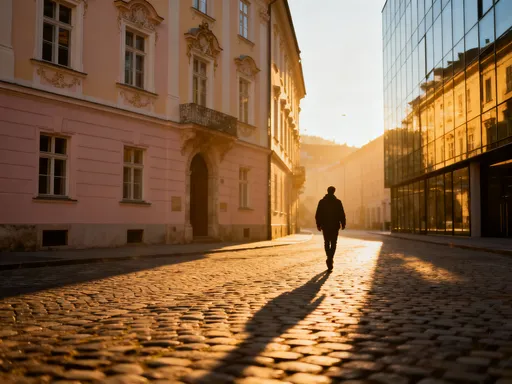
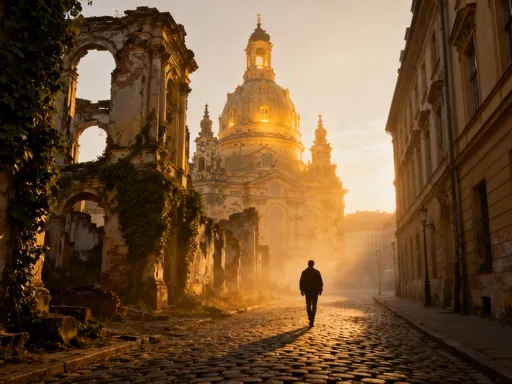
What changed my perspective was slowing down. Instead of rushing to check off landmarks, I allowed myself to wander without a map. I noticed the way sunlight hit the gold dome of the Frauenkirche in the late afternoon, casting long shadows across the square. I saw parents walking children to school, their backpacks bouncing with each step. I began to understand that Munich’s charm wasn’t in being picturesque—it was in being present. The city rewards attention. It invites you not to gawk, but to observe, to listen, to match its pace. And in doing so, you stop being a spectator and start feeling, however briefly, like you belong.
Morning Rituals: Coffee, Bread, and Local Life
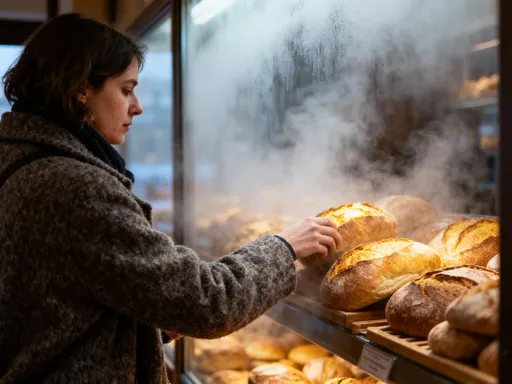
No understanding of Munich is complete without experiencing its mornings. The day here begins not with caffeine alone, but with bread—warm, crusty, and impossibly fresh. My introduction came at a small neighborhood Bäckerei near Gärtnerplatz, where the scent of baking rye and pretzels spilled onto the sidewalk before 7 a.m. Inside, the display gleamed with golden loaves, buttery croissants, and the coiled ropes of Laugenbrezel. A woman in a raincoat ordered two Weißwurst and a Brezn, speaking so quickly in Bavarian German that I barely caught the words. I followed her lead, pointing at the same.
The cashier handed me my paper-wrapped breakfast with a nod. Outside, I sat on a bench beneath a chestnut tree, peeling the delicate sausage skin as I’d been told—never cut Weißwurst, always peel—before dipping it into sweet mustard. A man reading a newspaper on the next bench looked over and smiled. “Guten Appetit,” he said. We didn’t speak much, but that small exchange, that shared moment of morning ritual, felt more meaningful than any guided tour could offer.
Munich’s coffee culture is understated but deeply ingrained. Unlike the hurried espresso bars of southern Europe, here coffee is an occasion, often paired with a slice of Apfelstrudel or a buttery Dampfnudel. In quiet corner cafes like Café Frischhut or Kleiner Feigling, locals linger over second cups, reading newspapers or chatting in low voices. The pace is never rushed. Even on weekdays, there’s a sense that mornings are for grounding, not rushing. These routines—bread, coffee, conversation—are not quaint traditions preserved for tourists. They are living habits, passed down and protected, a quiet resistance to the speed of modern life.
What I learned is that Munich’s soul reveals itself in these daily repetitions. The baker wakes early, the regulars arrive at the same time, the barista knows their usual order. There’s comfort in predictability, pride in craftsmanship, and dignity in the ordinary. To experience Munich authentically, you don’t need a special ticket—you just need to show up in the morning, order like a local, and take your time.
Hidden Courtyards and Secret Gardens
One of Munich’s best-kept secrets lies behind unmarked doors and narrow archways. Tucked between shops and apartments are the city’s historic Höfe—inner courtyards that open like hidden worlds. These spaces, dating back to medieval and baroque times, were once the heart of merchant homes and monasteries. Today, they remain sanctuaries of calm, often overlooked by visitors following the main streets.
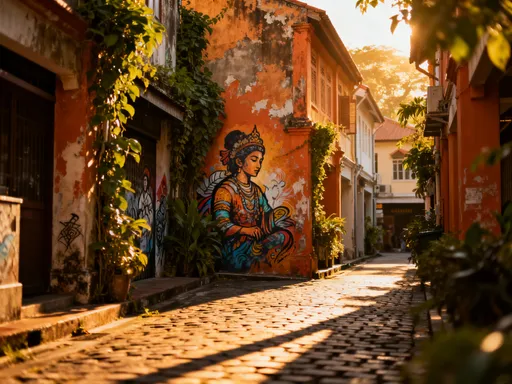
I stumbled upon one by accident, chasing the sound of a trickling fountain. Behind a plain stone entrance on Sparkassenstraße, I found a cobblestone courtyard wrapped in ivy, with wooden benches and geraniums in window boxes. A woman watered plants on a balcony above, and the scent of rosemary drifted through the air. There was no sign, no admission fee—just an open gate and the quiet understanding that this was a place for pause, not performance.
Some of the most beautiful Höfe are attached to old breweries and historic inns. The Augustiner-Keller, one of Munich’s oldest beer gardens, is accessed through a courtyard that feels centuries removed from the modern city. Stone arches frame a chestnut grove, and long wooden tables fill the space in summer, but even in winter, the courtyard retains its magic. Similarly, the Hof des Alten Rathauses near Marienplatz, though small, offers a glimpse into how Munich once lived—close-knit, inward-facing, community-centered.
These spaces are not curated for tourists. They exist because Münchners value privacy, greenery, and history. To find them, look for arched passageways, faded brass plaques, or the sound of birdsong where you’d expect traffic. Some are marked on maps, but many are not. The joy is in discovery. And when you step into one, the city’s noise fades, replaced by a stillness that feels almost sacred. In a world of constant stimulation, Munich’s courtyards remind us that beauty often lies behind the door we almost walked past.
Markets as Cultural Hubs: From Viktualienmarkt to Small Neighborhood Stalls
If Munich has a heartbeat, it beats strongest in its markets. The Viktualienmarkt, sprawling beneath chestnut trees in the city center, is more than a place to buy food—it’s a stage for daily life. Flower vendors arrange bouquets of sunflowers and lavender. Butchers display Wurst in gleaming rows. Elderly men gather at wooden tables with glasses of Weißbier, playing chess with intense focus. A brass band plays on weekends, their music floating over the clatter of plates and the hum of conversation.
But what makes the Viktualienmarkt special isn’t its size or variety—it’s the way it functions as a social anchor. People come not just to shop, but to see friends, to linger, to participate. A woman buys saffron from a spice stall she’s visited for 30 years. A chef from a nearby restaurant haggles gently with a farmer over the price of chanterelles. Every transaction carries history, every vendor has a story. Food here isn’t just sustenance; it’s identity, memory, continuity.
For a quieter, more local experience, smaller markets like Elisabethmarkt in Haidhausen or Wiener Markt in Bogenhausen offer a different rhythm. At Elisabethmarkt, the crowd is mostly neighbors—parents with strollers, retirees with canvas bags. A cheese vendor explains the difference between Bavarian Cambozola and Allgäuer Bergkäse. A man sells homemade Leberkäse from a stainless steel cart, slicing it thin and serving it on a roll with pickles. There’s no English signage, no souvenir stands—just real commerce, real community.
These markets are where Munich’s culture is lived, not displayed. They reflect the city’s values: quality over quantity, seasonality, craftsmanship, and connection. Shopping here isn’t transactional—it’s relational. And for visitors willing to slow down, to ask questions in broken German, to try something unfamiliar, the market becomes a bridge. It teaches you to taste the region, to see the seasons, to understand that food is never just food—it’s a language of care, of place, of belonging.
Museums That Don’t Feel Like Museums
Munich is home to world-class institutions like the Alte Pinakothek and the Deutsches Museum, but some of its most memorable cultural experiences happen in quieter, less famous spaces. What sets these apart is their ability to make history and art feel alive, not frozen behind glass. They invite participation, curiosity, and even play.
The Münchner Stadtmuseum, for example, houses a folk costume exhibit that goes beyond mannequins in glass cases. Here, you see actual Tracht worn by families over generations—dirndls with hand-embroidered bodices, lederhosen passed from father to son. Photographs and letters tell the stories behind the garments. One display shows a wedding dress from 1923, its lace yellowed but still elegant, accompanied by a diary entry describing the groom’s escape from inflation-era poverty. The exhibit doesn’t just show tradition—it shows how people lived it, adapted it, cherished it.
Another unexpected gem is the Kerscher-Schule, an interactive sound installation space near Maximiliansplatz. Created by designer Hans Kerscher, it transforms light and movement into music. As you walk through rooms filled with kinetic sculptures, your presence triggers chimes, hums, and melodies. Children laugh as they dance to make the space sing. Adults stand still, mesmerized. It’s not a traditional museum, but it captures something essential about Munich—its respect for innovation within tradition, its belief that culture should be felt, not just seen.
Then there’s the Dachauer Straße tram museum, where vintage trams are restored and occasionally run on special weekends. Riding a 1950s tram through the city, with its wooden seats and clanging bell, is a journey not just through space, but through time. These spaces succeed because they don’t demand reverence. They welcome touch, sound, movement. They remind us that culture isn’t something distant or elite—it’s in the way a city moves, the sounds it makes, the stories it keeps close.
Evening Culture: Beer Gardens, Music, and Unspoken Rules
As dusk settles over Munich, the city’s social life shifts outdoors. Beer gardens, often mistaken as tourist attractions, are in fact deeply local institutions. The largest and most famous, like the Englischer Garten’s Chinese Tower or the Hirschgarten, draw thousands in summer, but their purpose remains communal. These are places where families gather, friends reunite, and strangers share tables without awkwardness.
The etiquette is unspoken but universal. You don’t reserve tables with belongings—Münchners arrive and claim a seat, often sharing long benches with others. You toast with eye contact—prost!—and never clink glasses with someone who isn’t looking. Beer is served in one-liter Maßkrüge, but the focus isn’t on drinking, but on being together. A grandmother watches her grandchildren play near the chess tables. A student reads a novel between sips. The brass band plays folk tunes and old pop songs, their music carried on the evening air.
The Chinese Tower, surrounded by chestnut trees, is perhaps the most magical. As the band plays, lanterns flicker to life, and the scent of grilled sausages rises from the food stalls. There’s no stage, no barrier—just music flowing into the night. People clap, sing along, some even dance in small circles. It’s not a performance for tourists; it’s a tradition sustained by locals who return year after year.
These spaces thrive because they are inclusive, unpretentious, and rooted in routine. They don’t need advertising or influencers. They survive because Münchners value them. For visitors, the lesson is simple: sit down, order a beer or a Radler, respect the customs, and let the evening unfold. You don’t need to speak German to feel welcome—but a smile, a “danke,” a moment of quiet observation goes a long way. In the beer garden, culture isn’t explained. It’s shared.
Why Munich’s Culture Stays Authentic—And How to Respect It
In an age of overtourism, Munich has managed to preserve its authenticity not through exclusion, but through quiet insistence on dignity, order, and local pride. The city welcomes millions each year, yet it refuses to become a caricature of itself. Shops don’t sell cheap lederhosen on every corner. Restaurants don’t serve “German food” designed for foreign palates. The people speak German—proudly—and while many understand English, they appreciate the effort of a visitor who tries their language.
Seasonal festivals like Frühlingsfest and Kirchweih reflect this balance. Rooted in centuries-old traditions, they are celebrations of community, not commercial events. Locals dress in Tracht not for photos, but because it matters. Children ride carousels their parents once rode. Families picnic on blankets, sharing cold cuts and pretzels. The city doesn’t stage these events for outsiders—it opens them, with generosity, to those who come with respect.
Travelers can honor this spirit by embracing slowness. Learn a few phrases: Guten Tag, Danke, Prost. Avoid loud behavior, especially in residential areas. Shop at local markets instead of tourist malls. Stay in family-run guesthouses. Eat at neighborhood restaurants where the menu isn’t laminated. Most importantly, resist the urge to rush. Munich reveals itself gradually, like a conversation that deepens over time.
The real gift of cultural travel isn’t a souvenir or a perfect photo. It’s sensitivity—the ability to notice, to listen, to adjust your pace to that of the place you’re visiting. Munich doesn’t demand perfection from its guests. It asks only for presence. When you walk its streets with quiet curiosity, when you pause in a hidden courtyard or share a table in a beer garden, you’re not just seeing the city. You’re participating in it.
Munich taught me that culture isn’t something you see—it’s something you do. It’s in the way people greet each other, the patience at a tram stop, the pride in a well-kept façade. Travel isn’t about ticking boxes; it’s about tuning in. When we slow down and respect the rhythm of a place, we don’t just visit—we belong, even if just for a moment.